
VOCs in Paint: What They Are, Health Risks, and How to Choose Safer Paint

You probably know the smell: that headache-inducing, "like new" smell that is commonly associated with a fresh coat of paint. What are VOCs in paint, and why after 15+ years of painting homes do we only use low-VOC products?
What Are VOCs in Paint?
VOCs are "volatile organic compounds", which are carbon-containing chemicals that easily evaporate into the air at room temperature. VOCs = smelly chemicals that evaporate into the air.
They are emitted as gases from thousands of common products and materials, such as paint, cleaning products, furniture and carpets. Common VOCs include toluene, xylene, ethylbenzene, formaldehyde, and acetone.
The emission of VOCs is linked to increased air pollution, as VOCs are one of the main contributors to forming ground-level ozone, which contributes to the formation of smog. VOCs are classified as toxic under the Canadian Environmental Protection Act, 1999.
VOCs are linked to a number of health effects, including both short-term and long-term. Symptoms can include headaches, dizziness and eyes, nose or throat irritation. Long-term exposure to certain VOCs can increase cancer risk or damage to the liver, kidneys and central nervous system.
Why Paint Still Contains VOCs
Historically, VOCs have been used in paint to ensure better application, faster dry times, for adhesion, and for durability. VOCs are still present in paint today, however, many governments have regulated the use of VOCs in products as they are recognized to be harmful to the environment.
Government Regulations
Canada's first VOC regulations were in 2009, and just recently in 2022 they published the Volatile Organic Compound Concentration Limits for Certain Products Regulations, to limit VOC emissions from products manufactured or imported into Canada. These new rules went into effect in January 2024, so a fairly recent update.
Depending on the product type, Canada has set their mandatory VOC concentration limits to be anywhere from 100 grams of VOCs per liter of paint, to 800 grams per liter. This regulation is mandatory, meaning all paint in Canada must pass this test. This means that all paints available to purchase have what is to be considered a 'safe' amount of VOCs according to the government of Canada.
VOCs are still present in paint despite regulations limiting them. This is partly due to the benefit of VOCs in paints, which are responsible for certain qualities in paint:
Solvents & Pigment Suspension
In paint, VOCs are responsible for keeping the paint in a smooth, liquid state, ready for application. VOCs also help carry the pigment in the paint for a uniform consistency.
Evaporation & Drying Time
VOCs evaporate into the air, which helps paint dry faster and form a protective film on top. This is important as fast dry-time allows for more efficiency and quicker turnaround time, making it a desired quality in paint.
Protect Against Freeze Thaw
VOCs are intentionally added to many exterior paints to help lower the overall freezing point of the paint. Since many VOCs don't freeze at 0°C, they can prevent the paint from freezing over winter (which results in the paint cracking).
Common VOC Chemicals Found in Paint
It's important to note that many of the chemicals found in paint are also found in other everyday items such as flooring, furniture, and carpet. It is not our goal to fearmonger about the chemicals in your paint, as paint will always be made of chemicals. At Enviro Painting, we believe in educating our clients so they can make informed decisions about the types of paint they would like to use in their home.
Above all else, our goal is to reduce VOC exposure and help contribute to lower emissions. Unfortunately, the reality is, we all have been exposed to VOCs over the course of our lifetimes—and will continue to be exposed—since VOCs are everywhere. The best course of action is to attempt to reduce your exposure in ways that are manageable to do and make sense for you.
That being said, here are common VOC chemicals found in paint:
Formaldehyde: A known carcinogen that causes respiratory issues and eye irritation. It's added to paint primarily as an anti-microbial preservative and a binder.
Benzene: A known carcinogen that can cause neurological effects. It's added to paint to quicken drying time and liquifies pigments and resins, allowing for a smooth consistency.
Toluene and Xylene: Solvents primarily used in oil-based paints, lacquers, epoxy coatings and paint thinners. They carry pigments and resins which ensure smooth application and durability. They have strong fumes that can cause dizziness, headaches, and nausea.
Acetone: A very strong-smelling, fast-evaporating solvent that is typically used to thin specialized, fast-drying coatings like lacquers and two-part epoxies. It's unsuitable to be used with standard brush paints, however.
Are VOCs Dangerous?
Yes, VOCs can be dangerous. Paint fumes causing dizziness and headaches is a widely reported issue, and it's not for no reason. With paint, the risk to you depends on the level and length of the exposure.
Not all VOCs have known health effects, but some can be highly toxic, especially if exposed to them for years. For example, as mentioned before, formaldehyde can cause severe respiratory issues and is a known carcinogen, and benzene is known to cause cancer. Both are commonly found in paint.
VOCs are off-gassed (released as gases) from thousands of everyday items in your household. Indoor VOC concentrations are typically 2-10 times higher indoors than outdoors due to ventilation and fresh air intake being different.
You can expect to find VOCs off-gassing from things like paints, varnishes, cleaning supplies, disinfectants, air fresheners, perfumes, pressed wood furniture, new carpets, glues, permanent markers, or aerosol sprays.
Children, older adults, pregnant women, pets and those who suffer from asthma are all at an increased risk of VOC exposure. In a poorly ventilated room, repeated exposure over time could have adverse health risks.
Symptoms of VOC Exposure
Symptoms of VOC exposure can include headaches, dizziness, nausea and irritation to the eyes, throat and nose. Many people report symptoms such as these in a poorly-ventilated room after painting.
The biggest exposure risk is during application and right after painting.
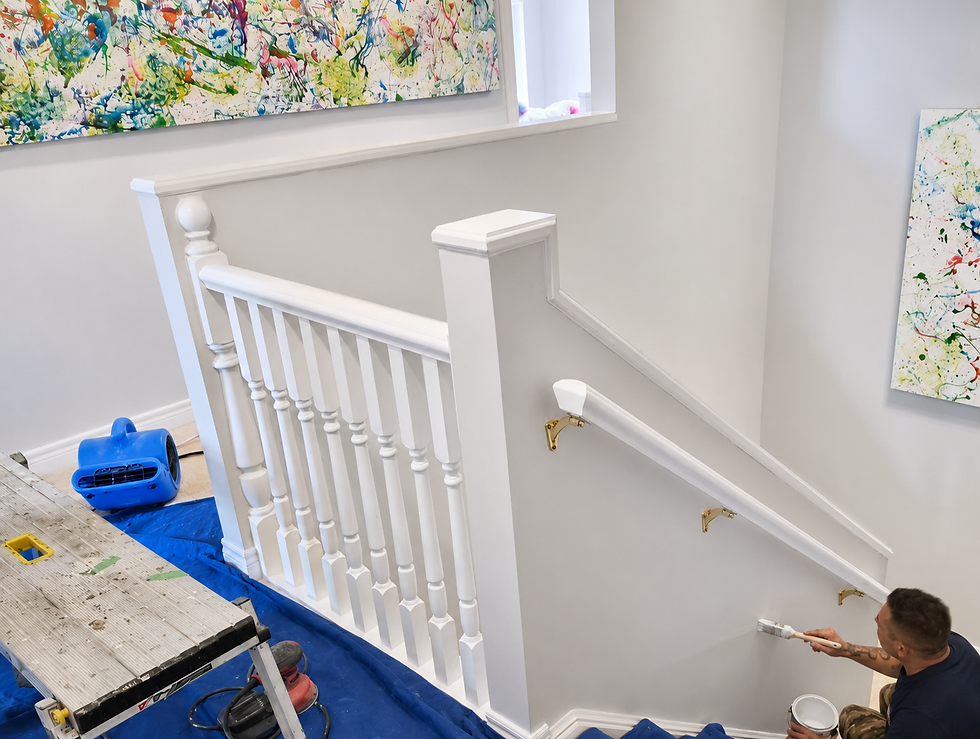
How Long Do Paint VOCs Last After Painting?
Think about how many rooms your house has, and how many times those walls have been repainted. Think about all the coats of paint applied each time. Over time, the effect of VOCs from paint can add up.
Thankfully, the heaviest off-gassing period is right after you repaint. The first 24 to 72 hours after painting are when VOC fumes are at their strongest.
Emissions slow down across the next 1-2 weeks. Even though the smell has gone away and the paint may be dry, paint can still release gases.
Trace emissions can remain for months or even years after, depending on the paint used. Oil-based paints and many primers are slower to release VOCs. They also release VOCs for longer than water-based paints.
How long VOCs last after painting depends on the paint type and the ventilation in the room. If the room has poor ventilation and low air flow, it may take longer for VOCs to off-gas.
Low-VOC vs Zero-VOC Paint
Low and zero-VOC paint have much lower VOC content than your standard paint. However, keep in mind that there is no legal definition of "low-VOC" for paint that is regulated.
Remember that according to the government of Canada, paints are required to have anywhere from 100 grams per liter to 800 grams per liter.
Many manufacturers and 'green' certifications for paint consider the following as benchmarks:
Less than 50 grams per liter = Low-VOC
Less than 5 grams per liter = Zero-VOC
Customers should look for the actual VOC g/L content either on the can or product data sheet (PDS), as well as a certification like GREEN GUARD or Green Seal.
GREENGUARD certification tests products against strict chemical emissions limits and screens for more than 15,000 VOCs known to pollute indoor air. If you see the GREENGUARD Gold mark specifically, that's the higher standard—it sets even lower VOC emission limits and is the certification to look for in nurseries, schools, and homes where children's safety is a priority.
Green Seal is an independent non-profit that has been certifying products for over 35 years, and its certification covers paints and coatings specifically. It goes beyond just VOC limits to look at the full environmental and health impact of a product.
With low-VOC paint, you may notice a faint smell, especially up close or right after application, however the smell will be noticeably less compared to standard paint. With zero-VOC paint, it may be hard to smell anything at all asides from a faint earthy smell.
Oil-Based vs. Water-Based Paint VOC Levels
Oil-based paints have higher volatile organic compound levels and off-gas for longer than water-based paints. Oil-based paints have higher VOCs because they rely on solvents (rather than water) to keep the paint in a liquid state for a better brush flow.
How to Reduce VOC Exposure When Painting
Choose a Low-VOC Paint
Cross-Ventilation
Protection
Air Purifiers
The easiest step to reduce your VOC exposure when painting would be to choose a low-VOC or zero-VOC paint.
When painting, ventilation is key. Open windows and doors on opposite sides of the room to create a constant stream of fresh air. Utilize and position fans to take the stale air out of the room and redirect it to other areas of the home.
Consider using personal protective equipment (PPE). Ordinary dust masks (N95) do not filter VOC vapors. In order to filter VOCs, you'll need to use a respirator equipped with organic vapor cartridges. You can also choose to wear safety goggles and long sleeves.
After painting, ensure you seal all your paint cans tightly after you're done using them. Keep your windows open and your fans running for at least 3 days after you finish applying the final coat.
You can use an air purifier equipped with a high-quality activated carbon or HEPA filter to capture lingering chemical odors.
If requested, we provide air purifiers and fans for our clients on-site after painting to ensure the cleanest air possible for them. This is important to consider when painting a nursery or for those who have asthma.
Do Low and Zero-VOC Paints Perform the Same?
In over 15 years of painting houses, we find that low and zero-VOC paints perform the same as standard paints. The one important thing to consider is the dry time may take longer and may require more ventilation to dry.
It's important to always choose a high-quality paint to ensure that you're getting a durable, quality product. We talk about the differences between budget and premium paint in our blog post here.
Does Tinting Paint Add VOCs?
Yes, tinting paint can reintroduce VOCs to the paint. Darker colors in particular require more pigment, therefore more VOCs.
It's worth noting that not all tints are the same. Sherwin-Williams has developed ColorCast Ecotoner Colorant technology, which are waterborne colorants that don't add VOCs.
Low and Zero-VOC Paints We Use & Recommend

Best Canadian Choice - Cloverdale Paint's Ecologic (Exterior & Interior)
VOC Content: Under 2 grams per liter (before thinning or colorants)
Ecologic is Cloverdale's ultra low-VOC interior and exterior paint, with less than 2 grams of VOCs per litre—well below even the zero-VOC threshold. In practical terms, there's virtually no smell during or after application, which makes it our go-to recommendation for nurseries, bedrooms, and anyone with sensitivities to paint fumes.
What sets it apart from some low-VOC paints is that the performance doesn't suffer for it. Many zero-VOC formulations struggle with flow and coverage—Ecologic doesn't. It applies cleanly by brush, roller or spray and is self-priming on most surfaces, which saves both time and cost on most jobs.
It's also a proudly Canadian product, manufactured right here in Canada—something that we will always support. The price is fantastic too.
Best Allergy-Friendly Choice - Benjamin Moore's Eco-Spec (Interior Only)
VOC Content: Zero (yes, zero!)
Eco Spec is Benjamin Moore's greenest and lowest odor paint, with zero VOCs and zero emissions. What makes it stand out for allergy and sensitivity sufferers specifically is the speed—the low odor completely dissipates within an hour after application, meaning painted areas can be occupied far sooner than with standard paint.
It's certified by the Asthma & Allergy Friendly® Certification Program and is one of the few paints to carry that specific designation. This makes it our top recommendation for nurseries, kids' rooms, and anyone in the household who suffers from asthma or allergies. It's also certified by Green Seal and several other green certification programs.
It's also worth noting that Eco Spec holds up on performance. It offers excellent hide, great touch-up, and superior chemical resistance—so you're not sacrificing durability for the low-VOC formula. Available in over 3,500 colors across multiple sheens.
Best Air Purifying Paint - Sherwin-Williams' SuperPaint with Air Purifying Technology (Interior Only)
VOC Content: Less than 50g per liter
SuperPaint with Air Purifying Technology is Sherwin-Williams' current low-VOC interior line. What makes it stand out is that it doesn't just avoid emitting VOCs—it actually works to reduce VOCs already in your home from other sources like carpet, furniture, and cabinets.
It does this by transforming airborne VOC molecules into water and harmless inert gas on contact with the painted surface. It also breaks down odor molecules at a chemical level rather than masking them—this means it's not a scented additive that wears off.
Worth noting: effectiveness depends on room size and light exposure, so it works better in well-lit, larger spaces. But for a zero-VOC paint that actively contributes to cleaner indoor air rather than just not making it worse, it's a strong option.
FAQs
Is it safe to be in the house while painting?
It depends on the paint being used and how well-ventilated the space is. With standard paint, we recommend staying out of the room being painted and keeping windows open to allow VOCs to off-gas. The highest period of exposure is during application and the first 24-72 hours after. With low or zero-VOC paint, the risk is significantly lower—you may still notice a faint smell during application but it dissipates much faster.
At Enviro Painting, we use low and zero-VOC paints on every interior job and can provide air purifiers on-site to help clear the air faster. If you have children, pets, or anyone with respiratory sensitivities in the home, we'd recommend staying out of the painted area for at least 24 hours regardless of paint type.
How long do paint VOCs last after painting?
The heaviest off-gassing happens in the first 24-72 hours after painting—this is when VOC levels are at their highest and the smell is strongest. After that, emissions slow down significantly over the following one to two weeks. Even after the smell is completely gone, paint can still release trace amounts of VOCs for months or even years depending on the product.
Oil-based paints off-gas for longer than water-based paints and release VOCs more slowly over time.
The best way to speed up the process is ventilation—open windows, run fans, and keep air moving through the space. Choosing a low or zero-VOC paint significantly reduces the off-gassing period and the overall exposure risk.
Is it safe to sleep in a freshly painted room?
We'd recommend waiting at least 24-72 hours before sleeping in a freshly painted room, and longer if the room has poor ventilation or was painted with standard paint. Even if the smell has faded, VOCs can still be present in the air.
With low or zero-VOC paint and good ventilation, the wait time is much shorter—some zero-VOC paints like Benjamin Moore Eco Spec dissipate odor within an hour of application. That said, we always recommend erring on the side of caution, especially for children's rooms and nurseries where occupants are more vulnerable to VOC exposure. Running an air purifier with an activated carbon filter in the room for a few days after painting is also a good idea.
Is paint safe for babies, children, and pets?
Children, babies and pets are all more vulnerable to VOC exposure than healthy adults—their smaller body size and developing systems make them more sensitive to airborne chemicals. For nurseries and kids rooms specifically, we always recommend a certified zero-VOC paint. Benjamin Moore Eco Spec carries the Asthma and Allergy Friendly certification and is our top recommendation for these spaces.
For pets, the same logic applies—keep them out of freshly painted areas until the paint has fully cured and the smell has completely dissipated. If your pet is particularly sensitive, consider using a zero-VOC paint throughout the home rather than just in specific rooms. We're happy to walk you through the right product for your situation before any job we do.
Does tinting paint add VOCs?
Yes, it can. The base paint may be zero-VOC but the colorant added when tinting can reintroduce VOCs—particularly with darker colors which require more pigment. This is one of the most commonly overlooked details when choosing a low or zero-VOC paint.
The good news is that some brands have developed VOC-free tinting systems. Sherwin-Williams uses their ColorCast Ecotoner colorants which don't add VOCs when tinting, and Cloverdale's Ecologic line is formulated to maintain its ultra low-VOC status across its color range. If VOC levels are a priority for your project, always ask specifically about the colorant being used—not just the base paint—to make sure the zero-VOC claim holds after tinting.
Is exterior paint more toxic than interior?
Generally yes—exterior paints tend to have higher VOC content than interior paints because they need to withstand UV, moisture, and temperature changes. The additional chemicals that give exterior paint its durability and weather resistance often come with higher VOC levels. This is worth knowing if you're planning an exterior project and have sensitivities.
That said, exterior painting is naturally better ventilated than interior work—you're outside, so the exposure risk is different. The bigger concern with exterior paint is keeping windows and doors closed during application to prevent fumes from entering the home. Ecologic from Cloverdale is a great zero-VOC paint that can be used in both interior and exterior.
What's the difference between low-VOC and zero-VOC paint?
Low-VOC paint is generally considered to be under 50 grams of VOCs per litre. Zero-VOC paint is under 5 grams per liter—essentially trace amounts. It's worth knowing there is no legal definition of either term in Canada, so manufacturers can use them loosely.
Always check the actual VOC content in grams per litre on the can or product data sheet rather than relying on the marketing language alone. For context, standard paint can contain anywhere from 100 to 800 grams per litre under Canadian regulations.
Look for third-party certifications like GREENGUARD or Green Seal on the can as additional verification that the low or zero-VOC claim has been independently tested and confirmed.
Do low-VOC paints perform as well as regular paints?
In our experience, yes. After over 15 years of painting homes and using low and zero-VOC products exclusively on interior jobs, we haven't noticed a meaningful difference in coverage, durability, or washability compared to standard paint. The one thing worth noting is that dry time can be slightly longer with some low-VOC formulas, and ventilation becomes even more important to help the paint cure properly.
Early low-VOC paints had a reputation for compromising on performance, but modern formulations have largely closed that gap. The products we use—Cloverdale Ecologic and Benjamin Moore Eco Spec—both perform at the same level as standard premium paints while keeping VOC exposure as low as possible.

Why We'll Never Go Back to Standard Paint
Enviro Painting didn't start as an eco-friendly painting company by accident.
Before Enviro Painting, when Tayne was working as a painter for other companies, they used whatever paints were on the job. Jordan, who was young at the time, suffered from asthma. It wasn't until they made the switch to zero-VOC products that his symptoms began to go away.
That experience changed everything about how they approached their work, and it's the reason Enviro Painting exists the way it does today. Everything we've covered in this post—the VOC levels, the certifications, the products we recommend—comes from that same place. We're not recommending low and zero-VOC paint without knowing the difference ourselves firsthand.
If you're planning a paint project and want to know exactly what we'd use in your home—whether you have sensitivities, young children, pets, or just want to be thoughtful about what goes on your walls—we're happy to walk you through it. Reach out for a free quote and we'll take care of the rest. We offer interior and exterior painting services in Kitchener-Waterloo, Cambridge, and Guelph.

Comments