
Can You Paint Over Old Exterior Paint? A Painter's Honest Answer

If you know us, you know that we prioritize proper prep above all else. Homeowners frequently ask us if they're able to just paint over the old exterior paint on their home. Some may just be wanting to do a refresh coat on their home and aren't sure of the proper steps. Some homeowners may not know the importance of proper prep when it comes to a paint job.
With 15+ years in the painting industry, we'll give your our honest answer. We'll deep dive into when you can paint over old exterior paint and when you can't, the reasons why, and what happens to a paint job when it isn't prepped properly.

The Short Answer
We're going to be a little controversial here: the answer is no, you generally can't just paint over old exterior paint—not without prep work first.
In almost every situation, some level of prep is required for a quality paint job. For siding, even if no repairs need to be done, the surface should at least be clear of debris and dirt beforehand. This requires at least a gentle cleaning beforehand. (We recommend a broom and water with a drop of dish soap, but you can use a power washer on a gentle setting if you have access to one.)
You'll always want to at least scuff-sand between old and new paint, which is universal painting advice. This helps create a roughed-up, consistent surface for the new paint to adhere ("grab on") to better. So no matter what, even if the surface doesn't require many repairs, a gentle cleaning and scuff-sanding will be required before painting over old exterior paint.
When You Can Paint Over Old Exterior Paint
There are times when all you need is a gentle cleaning and a light scuff-sand before reapplying exterior paint. This usually means your home's exterior is newer, maintained, or just recently painted.
The surface is clean and stable
The paint surface is clean (free of debris, dirt, staining, mildew/mold) and structurally sound (the siding/wood/door/material is not rotting or damaged). For siding particularly, it's important to give an honest assessment of the condition, as siding can develop cracks or have screw holes that need to be caulked and filled before painting.
The existing paint is well-adhered
The previous paint job is still well-adhered to the material. This means there is no peeling, flaking, bubbling, or any form of damage present on the paint film.
There's no moisture or mold present
There are no moisture problems near the area or mold present on or near the paint.
When You Cannot Paint Over Exterior Paint
Oftentimes, this is more often the case with our clients, especially when it comes to exterior work. We find that exterior painting work is left to the wayside more frequently than interior, and our Ontario freeze-thaw winters are harsh on paint. This means that on average, there are more repairs that need to get done. One or more of these things are likely true if it's been awhile since you last repainted your home's exterior:
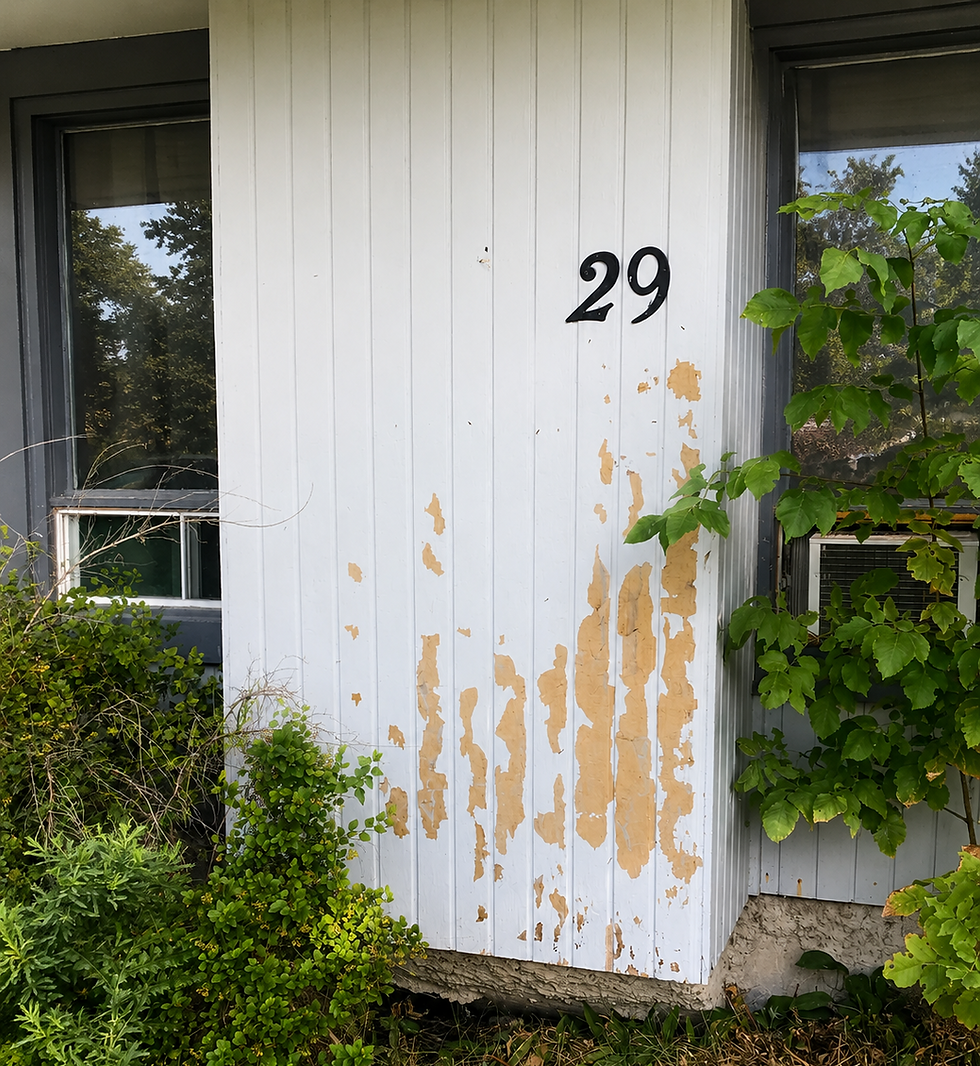
Peeling or Flaking Paint
This is the most obvious sign that the existing paint has lost adhesion (its grip on the surface it's painted on). You'll see edges lifting, curling, or coming away from the surface entirely.
Painting over peeling paint prolongs the problem rather than fixing it. The new coat will follow the old one and peel just as fast, sometimes faster. All peeling paint needs to be scraped back to a consistent, stable surface before anything new goes on.

Bubbling or Blistering
Bubbling looks similar to peeling but has a different cause—it's almost always moisture. Water has gotten behind the paint film and is pushing it away from the surface. Water can get in through small chips or cracks in the paint's surface.
Painting over bubbles seals the moisture in and makes the problem worse. Before repainting, the source of the moisture needs to be identified and fixed, not just painted over.

Alligatoring (Cracking)
This one looks exactly like what it sounds like: a pattern of cracks resembling reptile skin across the surface. It happens when paint loses its flexibility over time, usually from age or incompatible layers built up over years.
Unlike peeling, which lifts at the edges, alligatoring stays flat but is deeply cracked throughout. New paint applied over it will crack the same way within a season.
Mold or Mildew
Black or green spots on your siding is mold, and it's actively breaking down the surface underneath the paint.
Painting over it without treating it first means you're sealing it in. It will bleed through new paint, continue spreading, and often comes back darker. Moisture problems need to be fixed and the surface needs to be treated with an appropriate cleaner and fully dried before any painting begins.
Rust is Present
Rust on metal surfaces—gutters, flashing, railings, or any exposed metal trim—needs to be addressed before painting.
If you paint over rust, it continues to spread underneath the new coat and will bleed through eventually, leaving orange staining on your fresh paint. The rust needs to be sanded or wire-brushed back to bare metal, treated with a rust-inhibiting primer, and then painted. Skipping this step may still allow you to hide the rust temporarily, but it just delays it showing up again.
Rotted or Damaged Wood Underneath
Paint is a coating meant to beautify and protect, but it doesn't offer much if the material is rotting underneath. If the wood underneath is soft, spongy, or crumbling, no amount of paint will hold it together.
Rotted sections need to be replaced or repaired with a wood filler rated for exterior use before painting. This is one of the most common things we find during prep on older homes—and one of the most important to catch before paint goes on.
If You're Painting Over Oil Paint
This one catches a lot of homeowners off guard. If your existing exterior paint is oil-based and you apply water-based (latex) paint directly over it without proper prep, the new paint won't bond properly and will peel.
Proper prep can't be skipped here—the surface needs to be thoroughly sanded to dull the sheen and give the new paint something to grip, followed by a bonding primer before any topcoat goes on.
If you're not sure whether your existing paint is oil or latex, there's a simple test: rub a small area with a rag soaked in rubbing alcohol. If paint comes off on the rag, it's latex. If nothing comes off, it's oil.
A property we were called in to look at where latex paint was painted over oil. Notice the alligatoring, peeling, and chalkiness of the siding.
The Steps That Make or Break a Paint Job
Prep is the 'boring' part of a paint job most people don't see, but it's the part that determines how long everything lasts. A quality paint job is around 80% surface preparation. Here's what proper prep can involve, step by step.
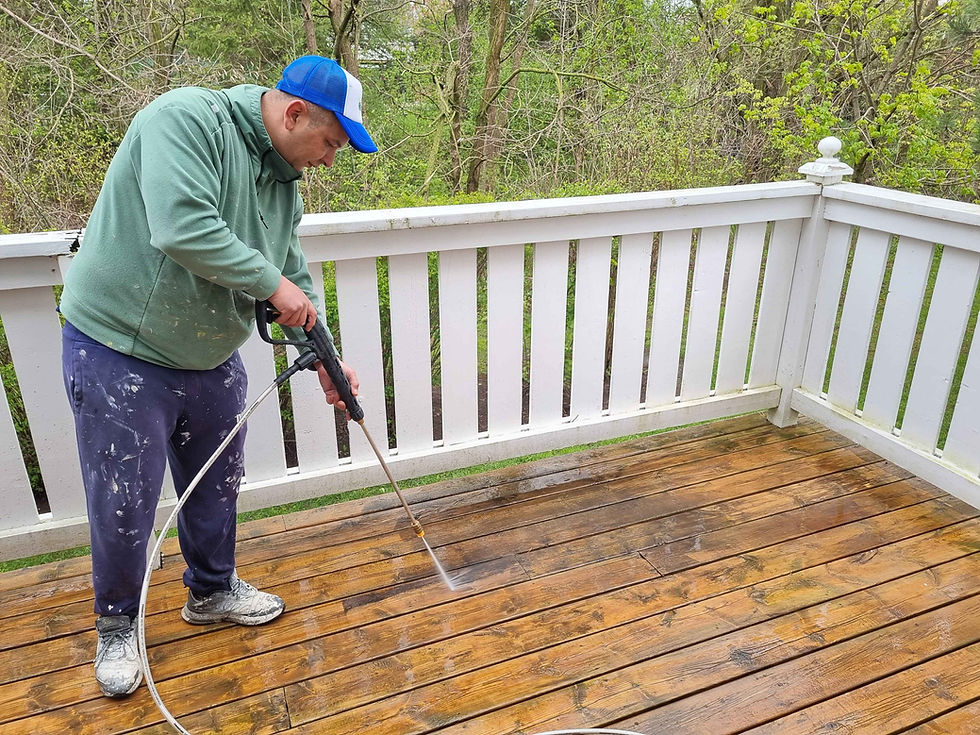
Power Washing
Before painting, the surface needs to be clean and free of debris. New paint will not adhere well to a dirty surface. A gentle cleaning is possible with a brush and soapy water, however, many surfaces that haven't been painted in years will benefit from a thorough power wash.
Power washing is also great at removing peeling or chipping paint, but it is messy. We use mesh drop cloths and plastic sheets on each job to ensure your property is kept cleaner and free of paint chips.
Scraping and Sanding
Any loose or failing paint needs to come off before painting and be sanded smooth. Painting over it does not fix the problem. The new paint will peel just as fast, if not faster than before.
Caulking and Filling
Gaps around windows, doors, trim, and screw holes is where water can get in to your home, leading to potential damage. Once water is behind your siding, it can damage the paint or material behind it. Every crack and gap should be caulked before painting.
Primer
Primer is not optional on bare or repaired surfaces—it's what gives the paint something to bond to. Primer can also block out stains and previous darker paint colors. Skipping primer on raw or patched areas is one of the most common shortcuts that leads to early failure.
Applying Two Coats
One coat is rarely enough for a lasting finish if you're covering weathered surfaces (or drastically changing colors). Two coats or more guarantees you the coverage, depth, and protection that an exterior job needs to last.
What Happens When Prep Gets Skipped
We frequently get calls from homeowners asking if we could help fix their peeling, failing paint. We fix these types of jobs regularly.
You hire someone, the price looked good, the job looked fine, yet within a year or two the paint is already peeling, bubbling, or failing entirely. The photos below are all real jobs we've been brought in to repaint. In almost every case, the cause was prep work that was skipped entirely or they painted an incompatible paint over the old finish.


How Long Should Exterior Paint Last in Ontario
A well-done exterior paint job in Ontario can last anywhere from 5 to 15 years depending on the area, the application, the condition of the material, exposure to UV, moisture and weather, and the quality of products used.
For example, a deck painting job may hardly last a season (it's not recommended to paint decks.) But a well-done exterior vinyl siding paint job could last 10 years.

Should I DIY or Hire a Professional For an Exterior Job?
For most homeowners we would recommend hiring a professional. Exteriors often require tall ladders and it's best to have a professional do it safely with the right equipment.
If your siding is in good shape and you're comfortable on a ladder and with the height, a refresh is something that most DIYers can take on. If there's peeling, damage, missing caulking, or it hasn't been painted in several years—you'll want to ensure you do your research beforehand and make sure you're confident in how to do the work.
Thinking About Repainting Your Home's Exterior?
If you're not sure what condition your home's exterior is in, we're happy to come take a look. We offer free in-person exterior & interior consultations across Kitchener-Waterloo, Cambridge, Guelph and surrounding areas with no pressure and no obligation to you. Trust Enviro Painting for a stress-free experience and a paint job that lasts.
We also have a helpful blog post covering 8 signs your home's exterior may need repainting. Whether you're DIYING or hiring a professional, knowing when prep is required for an exterior job is a necessity to make your paint job last.


Comments